Big Discount… Off What ?

“In our view it will never be cheap enough and in Boeing’s view it is always far too cheap.”

Michael O’Leary-CEO Ryanair, after placing an order with Boeing for $40 billion -before discounts

Within any commercial environment , I don’t care what type of clients you have , they will always ask for discounts in one way or another.

It is expected . The frustration, occurs, for me anyway , when they don’t really know what they are talking about.

The conversation may go something like .

Well what sort of discount are you going to give me ? ‘cos Extra Cheap Super Supplies Ltd gives me 40% off if I buy 50 of their top of the range Super Widget.

What is the net price of their Super Widget after discount?

What do you want to know that for ?

Because 40% off Super Supplies Ltd price equals £0.90 per super widget and our Super Widget less 10% equals £0.85p

I still want me 40%

You can’t help but want to throttle them. I had a wholesale customer, a number of years ago , who was doing a seasonal promotion selling an item at a very keen net price. He had flyers printed ( as you did then) and sent them to all his client base. It did not work because a competitor was doing a promotion on exactly the same product but giving a big discount instead of a net price. The net price wholesaler abandoned this type of promotion and went back to discount only promos. The Discount wholesaler was 15% more expensive than the Net wholesaler .

At Retail the issues are a lot more complex. An independent retailer faces very different problems to that of a multiple. Invariably, the independent will have to reduce margins to offer favourable discounts. The multiple will expect the discount to be funded by the supplier. As to whether the consumer is getting a bargain is up for debate .

In May this year, Boohoo made headlines for agreeing to pay $197m (£159m) to settle a lawsuit accusing the retailer of using “deceptive” discounts across its fashion brands. 

Raconteur June 2023

In the UK there is a law in place to obviate false discounts. However, this particular law is much and easily abused . An article has to have been offered in that location for at least 28 days at a higher price before any discount is promoted. So what happens? 2 common outcomes

  1. Retailer buys ‘specials’ from a supplier puts them on the shelf for 28 days at an artificial price the offers a special sale price, which is a lot closer to real price.
  2. Retailer quite simple has product on shelf at inflated prices and then offers a sale price which only reflects their usual margin.

“Artificial inflation is unfortunately incredibly common in retail and not just in the fashion industry,” 

Nick Drewe, founder of discount platform WeThrift

Online is a lot more murky .

One in 10 deals on Black Friday last year was fake, she says, with 25% of products more expensive than at the start of November. 

Liisa Matinvesi-Bassett, UK country manager at price comparison platform PriceSpy.

Despite all this, discounting remains a significant tool in the commercial box. How it is used effectively is perhaps more of a dark art.

That dark art is, I believe, well practiced by Pizza Outlets. As a consumer (only very occasionally) it really annoys me. Pizza Hut, Dominoes , Papa Johns, they are all at it. Their list prices of Pizzas are exorbitant. You can buy a far better quality pizza in any supermarket chain for a fraction of the price . Worse still, you buy one in a good restaurant for less than the list price of the main Pizza franchises . They make the sale by artificial discounts. There are BOGOF’s, buy one family sized and get one free or a bottle of coke and a tub of ice cream free, The week’s special, the summer’s special , Halloween special . The variety of offer is endless . Yet none of these specials equal that of a recent Sainsbury offer

2 pizzas and a tub of Ben & Jerry’s for a fiver.

I don’t really get it. Most of the other major fast food outsets don’t use this strategy, McDonalds , and KFC sometimes do the odd major promo like lending you Florida for a day or a plastic toy but their pricing strategy is not dependent on discounting . With Pizzas it seems part of the DNA.

There are many dangers in its misuse

The devaluation of the product or service

The innate possibility of actually foregoing volume . For example within the grocery industry the ‘BOGOF’( buy one get one free) can severely negate volume if incorrectly used . If you sell a bar of chocolate and you get one free , you will probably sell more as the consumer will eat more . However , if you do the same with a box of tea they are unlikely to drink much more tea and just use it to replace a future purchase.

The postponement of stock replacements if you know the supplier regularly discounts . This can also cause lost revenue by being unnecessarily out of stock.

The customer never trusting standard pricing.

Discount expectation.

Encouraging overstocking resulting in delayed restocking at normal prices.

The Benefits of Discounting

Entry to market

Defence of market share

Winning new customers

Assisting Customer promotions

Pre-empting competitive action

Genuine customer support

Developing customer loyalty

Much of it boils down to how you manage your discount strategy . None of it is much more that a little common sense and the understanding of your market place .

Customers need to ask questions (trade and consumer) of the discount they are being offered . The biggest being

1.Is it real -see Pizzas?

2.Do I need the product ?

3.Is everyone being offered it(b2b) if they are does it give me any advantage ?

4.Is it good stock ?

5.Is it a good value discount ?

6.Might there be a better one next week ? ( I get weekly offers to subscribe to the New York Times. There will be stuff like 24 hours to claim you 25% discount. Then the following week it says the same but the discount is 50% and so it goes on).

7.Will it help my business ?

8. If I take the deal do I need the product (or service)

9. Can I buy cheaper

10. Perhaps more importantly can I buy better ?

So what to do ?

I think the above 10 points are a good starting place . Discounts are a very strong tool for the seller and can be a good opportunity for the buyer , just approach them with care.

There are no victories at discount prices

Dwight Eisenhower

I’m not completely sure I know what he means . I suspect it is something like there are no victories without a cost. It sort of makes sense but depends upon the context much like any discount .

Consumer or Business when offered a Discount ,think of it like a used car . Take a look under the bonnet (hood)first .
Are you under the Influence …..?

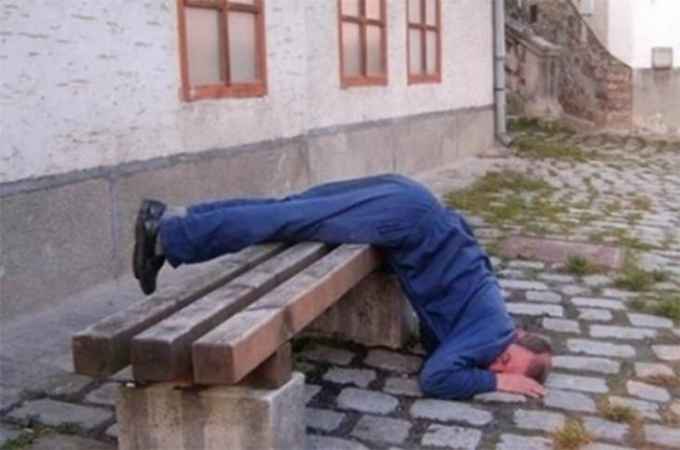
There are those who assume this Guy is completely plastered . There are then, those who think he is peering down a tiny hole in the paving through which he has found an Egyptian tomb stuffed full of wondrous treasures.

Whatever , I will return to this later or I may not .

Marketing evolves . Traders have been travelling to Market towns for millennia displaying and dwelling their wares . In 1902 The University of Pennsylvania offered the first Marketing Course. Professional market research started in the early 1950’s. Since then, there has been a massive influx of new tools that make up the marketing mix. The latest and perhaps one of the more controversial is that of the Influencer.

So what is Influencer marketing …

Influencer marketing is a collaboration between popular social-media users and brands to promote brands’ products or services. These partnerships have been going on informally since the dawn of social media. By 2009, they were sufficiently commonplace for the US Federal Trade Commission to step in and regulate them through the so-called Mommy Blogger law. (China, India, and the United Kingdom have introduced similar regulations.)

Since then, the market has grown astonishingly quickly: over the past five years, it has increased by more than 50 percent on platforms such as Instagram and YouTube (in Western countries) and Pinduoduo and WeChat (in China). This year, the influencer marketing economy was valued at $16.4 billion.

McKinsey April 2023

In one way or another Influencer Marketing has been going on since, certainly, the advent of TV advertising . Like it or not, consumers have bought Walkers Crisps, because of Gary Lineker, Nespresso because of George Clooney. But the current definition of an influencer is somewhat different as in most cases they did not start life as a celebrity and they work within a social media environment.

I was and am still not convinced by the idea. I think there is a growing understanding that these are people paid to give glowing reviews. Nothing new there, but as with endorsers rather than influencers it is unlikely they could swap brands quite so easily. That all said there are key attributes that can make them very useful tools in the marketing mix particularly with small companies and small budgets .

Just look at a very simple example of an Independent Retailer ( of any description), the use and relatively low cost of using an influencer with local knowledge and insight can, potentially, have a far quicker impact on the local community , or more especially the section of which you wish to target than any comparable marketing campaign such as local papers , leaflet drops or even local radio.

Many do or will try to do their own social media campaigns. They obviously cost less but I suggest that few are truly successful .

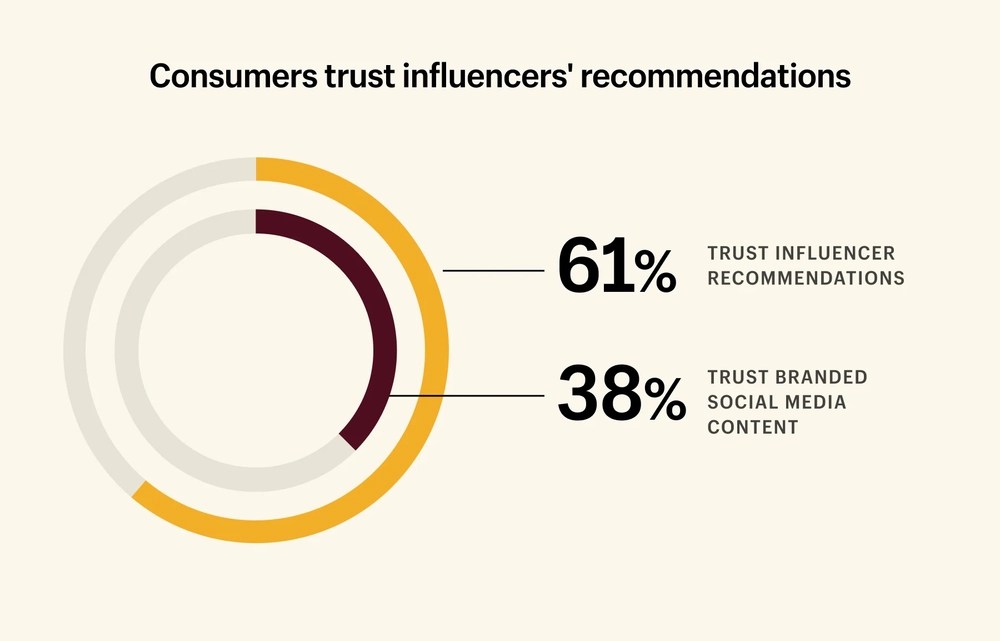
These figures come from an American agency (Social Shepherd) but nevertheless they seem to reflect what is happening elsewhere. Like any survey question it very much depends how the question is structured.

I have seen within the industry the impact of a good influencer. It was very impressive. The influencer took an relatively unknown Brand of product into the market virtually overnight. There were other factors. It was during Covid and there were supply issues nevertheless it very much shortened the passe of entry to market .

Here is quite a comprehensive guide from The Chartered Institute of Marketing. I have included it all as I think there is some very useful information here.

1. Identify your target customer/audience 

Knowing who you’re selling to is crucial and can often be mapped out using a buyer persona, which outlines your target customer’s demographics, challenges, motivations, and story. 

People typically buy for one of three reasons – to make money, save money, or look/feel good, so understanding how you tick one of those boxes is the first step. 

2. Outline your goals 

Having clear goals when creating an influencer marketing campaign is crucial but often overlooked. 

This includes your KPIs (key performance indicators), budget and OKRs (objective key results). Without these, you won’t have an easy way to determine whether your campaign is going in the right direction or whether you have a positive ROI (return on investment). 

3. Find where their “watering holes” are 

Successful influencer marketing campaigns depend on knowing where your target customers spend most of their time-consuming content and discovering products/services (their watering hole). This may be on one or many social media platforms, such as TikTok, Instagram or LinkedIn; it may even be blogs, in-person events or YouTube. 

To find this information out, you can either ask them directly or monitor social media activity to identify where your target customer engages with content most frequently.

4. Discover influencers at the watering hole 

Now you know where your buyers spend their time, it’s time to find influencers in that space. Fortunately, there are many tools and marketplaces you can use with advanced filtering to find these influencers, such as: 

  • Intellifluence: This is the most “complete” influencer marketplace, allowing you to find influencers across Facebook, TikTok, Instagram, LinkedIn, Twitter, Blogs, YouTube, and many more with advanced filtering options to find the right person for your niche. 
  • Influencity: Influencity is a great way to discover influencers suitable for your marketing campaign, whether you need 1 or 10 from the 70 million available. Influencity also has a free trial. 

Build a database of at least 10 influencers before moving to step 5, as it takes trial and error to find the right one for you. 

TIP: Buying followers and falsely inflating numbers is common in the industry, so check their numbers through tools such as MODASH

5. Reach out to them and discuss campaigns 

Now you have a list of influencers, it’s time to contact them to explore the idea of forming a partnership and engaging in a campaign. Below we have listed how to contact different types of influencers:

  • Instagram and TikTok: Often, their email will be displayed in their profile bio, or you can send them a dm. More prominent influencers will be looked after by a management agency that adds their own company email in an influencer’s bio. 
  • Blogs: The best way to get in touch with bloggers is via their email, contact page, or even partnership page. Top bloggers will even include their press kit (explained below) on their website to make it easy for brands to work with them (contact page example and partnership example).
  • LinkedIn and Twitter: Direct messages are best for these platforms. To maximise chances, drop them an email too.

When you reach out, always ask for their press kit, with screenshots of their analytics to prove the engagement figures (website clicks, views, comments, click-through-rates etc) they claim.

6. Set clear deliverables and keep performance indicators 

Now that you have a list of qualified influencers, it’s time to outline the clear deliverables and KPIs you expect from the campaign. 

In some deals, you may be giving them something for free, such as the item/service you sell, in return for a promotion. In other arrangements, there will be money transferred, so be sure to outline and agree, in writing, precisely what you expect to receive. 

Ultimately, the best way for any business to find how to work with influencers is via trial and error. Sometimes the “ideal” influencer just won’t get a return for your brand as their audience may not resonate with your offering, or the content isn’t creative enough. 

As a general rule of thumb, if you follow the above 6 steps on how to work with influencers as a small business, you will be going in the right direction.

Like ’em or loathe ’em , for the moment, they are here to stay. Or at least until something else like a very cheap fully qualified marketing robot appears. They are accessible and affordable, don’t let’s ignore them. They should be part of your marketing mix no matter how small the budget.

Back to the Guy at the top . It’s about perception . Most of our decision making processes in daily life are made on the basis of how we perceive stuff.

Has he fallen out the sky?

Has he been shot in the back ?

Has he had a heart attack ?

Is he drunk ?

Has he found a spy hole into an Egyptian ?

Without any further information , all these are possibilities based on our perception .

What I am trying to say is if you have a certain perception about Influencers may I suggest you check it out first before discarding the idea. If you are still not convinced check out every small hole you see in the ground and see there any other alternatives .