
Three years ago, I posted about my experience with bots. The Good and the Bad. I return unenthusiastically and reluctantly.
I expected that within three years, there would be some amazing changes. There is scarcely a conversation where the two letters AI do not occur. Ginormous data centres have been constructed worldwide to cope with the demand. Throughout the world, governments are replacing all the decision-makers with AI (maybe not quite). We can all sleep safely in our beds knowing that all is good and we won’t have any more dodgy and corrupt politicians. AI has come to the rescue (or so say the likes of Thiel and Musk).
Well, today it has come all unstuck or at least for me. Having spent the entire morning in the company of 2 Bots trying to sort out a very simple problem, I am ‘gobsmacked’ by their complete inability to respond to this very straightforward issue. What made it even more ‘ gobsmacking’ was that I was dealing with two very large communications companies. I have no issue with saying who they are, as I think it is especially relevant: TalkTalk and Everymail (Open-Xchange- the world’s largest email software provider).
Very quick(ish) resume:
I wanted to delete an email address and the mailbox as it had not been used for quite some time apart from receiving mainly emails trying to sell us stuff. The Bot asked for certain details such as account name, etc and the relevant department. Great stuff, we are on the move. It then asked what we wanted to do. Having answered, it said it would direct us to the right department. All ok so far. I got through to a department which then asked what I wanted to do. I repeated our requirements. It gave us some instructions. They did not work. It gave an alternative; it did not work. The bot said it would pass us on to a customer services agent (not convinced this was not a bot either from the way the speech was framed). Anyway, I went through the whole procedure all over again.
I am now looking at the best part of forty minutes. Then I was handed over to someone else, who probably was a person, as he was called John! John suggested a couple of other ideas which, of course, failed, only to finally tell us the server for our email was no longer operated by TalkTalk, but had been transferred last August to Everymail. Thanks for telling us, John … oh, but we did send everyone an email last August. No, you didn’t, as I have the untouched inbox for the last three years in front of me. That’s the first hour flown by.
Now I am talking to an Everymail Bot. To my surprise, this one responded very quickly. However, the instructions given did not relate to the functions available on our account. Pointing this out at least twice got the Bot to change its mind (impressive- easily impressed by now) and redirected the instructions from the left-hand side of the page to the right-hand side. Still didn’t work. Finally it said …so you would like to close the account? I said yes, please. And the Bot disappeared.
So I asked the King(or Queen) of Bots- ChatGPT- if customer service Bots are frustrating.
Yes—customer service bots can be frustrating, but it depends on how they’re designed and what the customer is trying to accomplish.
People commonly find customer service bots frustrating when they:
- Don’t understand what the user means, forcing repeated rewording.
- Trap users in predefined options instead of allowing free-form requests.
- Can’t solve complex problems, such as billing disputes or unusual account issues.
- Make it difficult to reach a human agent, leaving users feeling stuck.
- Ask for the same information multiple times, especially after transferring to a human.
- Give generic or irrelevant answers that don’t address the actual issue.
- Take too long by leading users through unnecessary steps.
Ticks every box for me.
However:
- A single chatbot can handle the workload of 700 full-time agents.
- Companies have seen profit improvements of up to $40 million in a single year.
- Average query resolution times have dropped from 11 minutes to under 2 minutes. –Sobot.io–USA based Bot Company
With the global chatbot market projected to reach $9.56 billion, their role in transforming customer service interactions is undeniable. Companies are adopting chatbots to save up to 30% in support costs, amounting to $8 billion in savings.-Same Company
Chapter 247-Tech Co Based in India
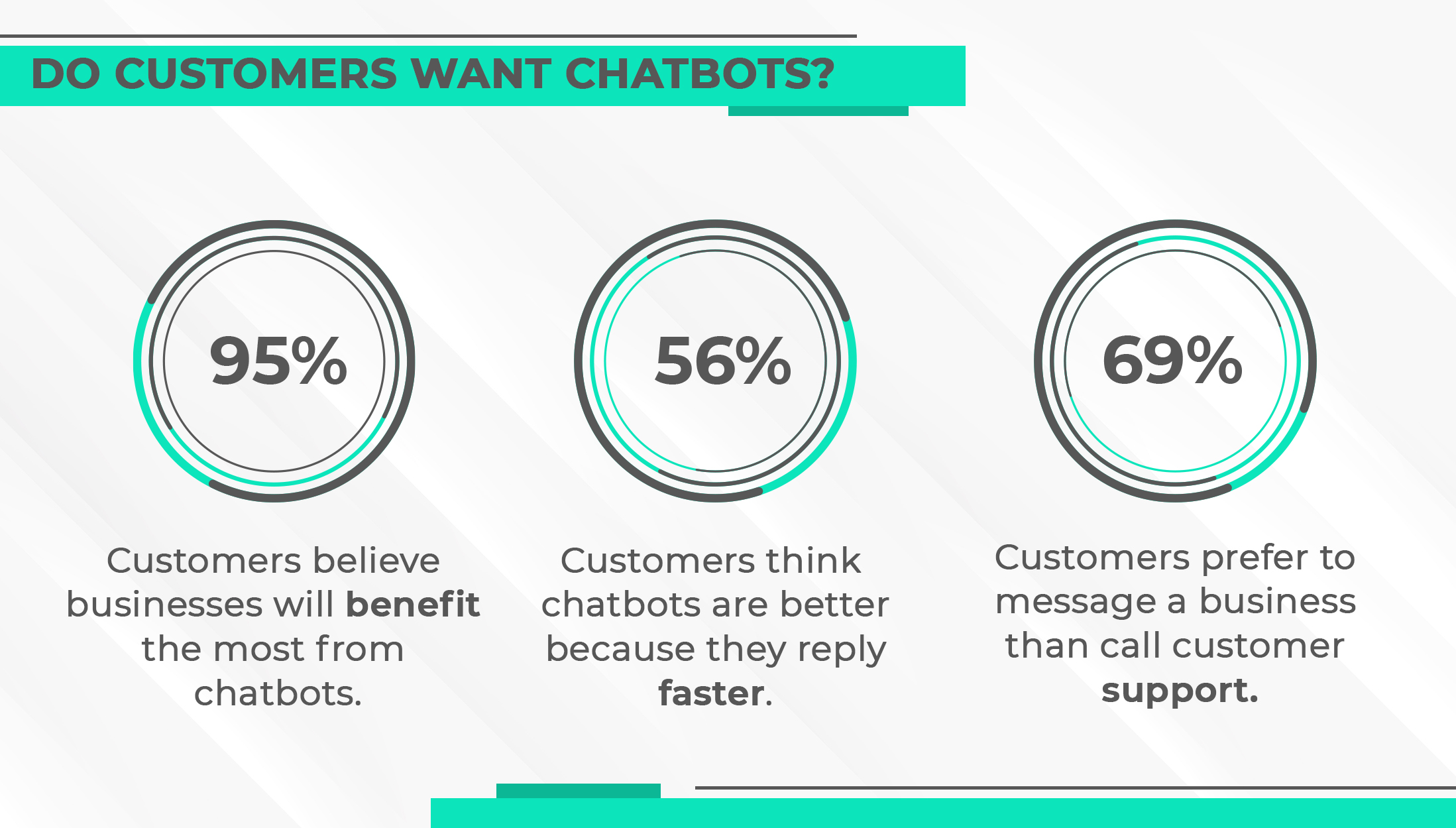
Much of the ‘research’ as to the effectiveness and consumer acceptance currently seems to be carried out by the very companies that are selling their own ChatBot packages. Yet if you consider the responses of the three questions in the above diagram, they are hardly ringing endorsements.
Customers believe businesses will benefit most- very likely to be true, but it says little about benefiting the customer.
Customers think they are better because they reply faster. I would like to read the whole question as it does qualify what the customer thinks of the reply.
Messaging does not necessarily mean using a ChatBot.
This week I tried my luck with a Chatbot query of a major international payment company. I told the Bot my problem, and it responded very quickly and with a reasonable number of lines of text. Much of which repeated my question; none of it offered anything close to a resolution. I asked to speak to someone, and within three minutes I got a call. Within another two minutes, the problem was resolved. Yes, it was quick, but it was just quick finding me a human.
The very first Chatbot was back in the mid-1960s, called Eliza.
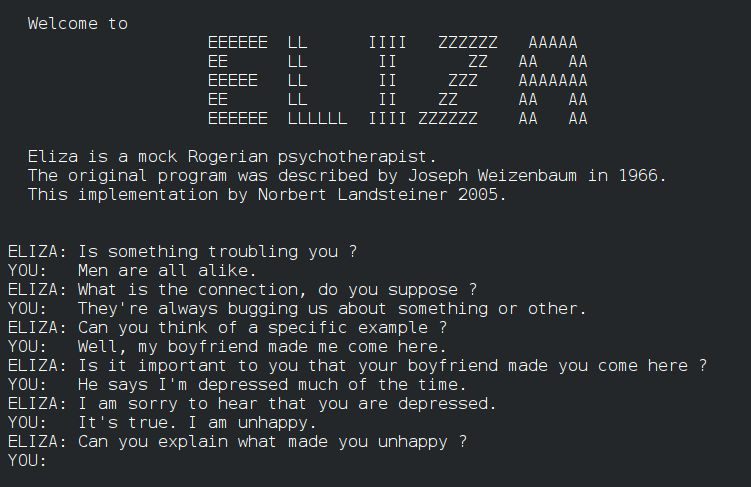
Today’s technology probably started with WeChat back in 2009 and has continued at a pace since then. But has it really?
Clearly Bots have a significant place within both large and small organisations. They are very efficient at collecting customer data and efficient in giving out basic stuff. What I cannot get to grips with is that after such a long period of gestation, they are not a lot more sophisticated and effective.
A baby learns to crawl, walk, and then run. We are in the crawling stage when it comes to applying machine learning.” — Dave Waters (The founder of Deeplearning.ai)
So I have found.

