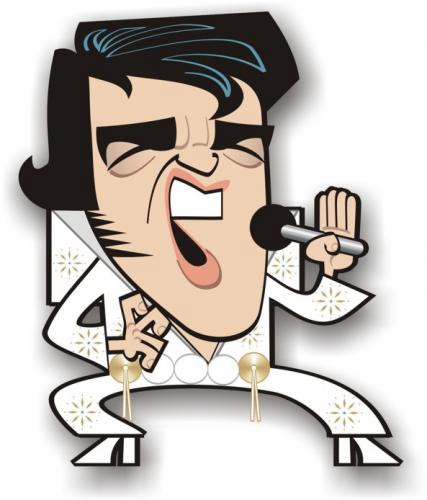
All Shook Up….World Politics ..and no less than the Retail Party Market!

Oh, well, a-bless my soul, but what’s wrong with me?
I’m itchin’ like a man on a fuzzy tree
My friends say I’m actin’ wild as a bug
I’m in love
I’m all shook up
Hmm, ooh, yeah, yeah, yeah

Elvis Presley

I am fascinated by World Politics but am not even remotely qualified to comment apart from the ‘bleeding‘ obvious, it is all shook up , at least in the Western Democracies . I am fascinated by the party market, remain unqualified but have at least enough years within the market, feel I can have a vaguely qualified opinion. For those who don’t know, I am not referring to THE Party market, in terms of having an apparently great time , throwing vast quantities of alcohol down your throat , a quantity of ‘Party?’ drugs, playing monotonous music and in some cases hours and hours of sex ! Well that’s what I have been told. I mean balloons, fancy dress, and party decorations. Sex and drugs maybe involved but not within the Retail Market place. I think? That said I am a bit like the Drug dealer who says…..

Or at least those I watch on telly say that! I don’t go to parties but I sell the stuff that is used to create a party atmosphere.

When £70 million plus is spent on Glastonbury Festival tickets, in a matter of hours after the official web site opened for 2024, the Party market is struggling to find consumers who will spend any money to have a party at home . This is not a UK problem , I know for certain this is a world wide malaise.

Within the last 2 months, 3 of the leading brands have encountered severe financial issues. Smiffys, Amscan and Qualatex (Qualatex in North America problems started over 18 months ago) the three leading brands in Dress Up, Party and Balloons, are in the process of being restructured in one way or another. How and why has this all happened in such a short period and at virtually the same time ?

Traditionally the Party market has always weathered Economic downturns . I can remember quite clearly that during poor economic climates in recent decades it has stood up well and in some cases flourished. The consumer whilst strapped for cash, stopped going out or having celebrations in third party locations stayed at home and spent what they had on making the home party, the fun place .

So what is different? A maelstrom! I am averse to hyperbole but I think in terms of context , it is not hyperbolic. It is, if nothing else, a perfect storm and below I have bullet pointed in no particular order my reasoning. I will, then, qualify them in a little detail . All of these I believe are relevant in Europe but what I can gather is it also true of most consumer based societies.

Covid has been used as answer for a whole load of stuff. However, there is a lot of validity in many of the rational, massive change in consumer behaviour, supply disruptions, peaks and troughs in demand. Some of those peaks being slightly false because they were magnified by shortages of product . All the many implications highlighted long standing weakness in the supply chain.

Cost of Living

Without doubt has had a huge impact over the last 12 months. It may seem a little supercilious to say Why? As it is blindingly obvious. Yet it is not as simple,as above, in previous recessions party has faired well. The next 3 points have a lot to say about Why?

Change in Consumer Behaviour

Covid has had a major influence on consumer behaviour. I don’t really think anyone knows quite what those changes are. However, one very obvious change and example within the party market was the use and consumption of balloons (especially Latex) . It created a huge boom (more bubble in my view). Consumers being at home watched loads of youtube videos on stuff like Balloon Decorating and wanted to get in on the act whether for personal amusement or for starting a business. There was plenty of online information on how to do this and for a start up business it was very inexpensive to get set up. And set up they did, in their droves.

Going from the market being starved of product , the market is now over supplied and many of those who started small decorating business have discovered it was not quite as easy as they thought and it certainly was not as profitable.

This, however , is only one example, there are many others , yet for the most part, and I repeat, none of us know as to what they are .

Part of this change maybe along the lines of an article I have just read concerning Treatonomics . This, according to some journalists in the UK Times Newspaper, is where those on a reasonable income , but have little disposable income splash out on having fun. Generally involving going to some event or other. It has come to light when Barclays Bank has estimated that the recent Taylor Swift Tour in the U.K generated over £1 billion in additional(not including Swifts own take) revenue. This is just not ticket revenue, but hotel, travelling, eating out , drinks and everything else involved on going to a major concert. It has a term , yes, you are quite right, swiftonomics. It is not only confined to the UK as most other cities where she has performed are recording a similar impact. Moreover, some heads of state are asking for her to perform in their countries. Chile was very peeved as she decided on Argentina and Brazil . ‘What about the Chilean swifties?

The Chinese

This is not about the current concerns among Western Governments’ security concerns, or a poke at he national identity of the Chinese nation it is rather more direct and obvious.

As a market place we have just about got our heads around Amazon & eBay . Both heavily laden with Chinese Product. But it has not stopped there. We, the party market, have the likes of Themu, Shein, Aliexpress (Thanks David Beckham -see TV ads) to contend with. It would be very naïve to think that these have not sucked a load of consumer demand away from the traditional supply chain. Within that chain I would include home grown B2C webshop buying from local suppliers as well as market place sellers and Independent Party Retailers.

Market Changes

Prior to 2020 there were indications of market changes. For example within Party dress up, there was a consumer move away from full costumes to dress up accessories. Certainly in Europe, the costume market had peaked and was at a plateau. Within the general party market , which had developed enormously over the last twenty years, there was a feeling that it had a come to a standstill. I couldn’t count the number of customers who said ‘we need something new’. Of course there was and is a lot of new product but general it is always a variation upon on a theme. The consumer has or is changing and we have not been changing enough within the market supply chain . Circumstances now tell us we have to.

So why have 3 major brands all gone down at the same time? Is the market over supplied? Probably. A big problem within a relatively small market ( it is not mobile phones, cars, or fashion . We are talking about occasional purchases generally of lowish value) is that when a Brand dominates a market, it is difficult to achieve growth. As a consequence I believe some of the bigger players have made errors in their operations because they were striving for double digit growth or at very least market domination. If you supply all the major outlets in your market place where are you going next ? Just as significant is if you loose a major player or have your range reduced, how do you replace it ? I can only speak in terms of the UK but I am pretty sure it holds true in Europe, that the majors are supplied on a much reduced margins. If that were the case in many cases it would only act as contribution to overheads, losing that business means no contribution to overheads. Where do you go to replace this business when you are a Brand leader? An oversimplification perhaps, but it illustrates some of the problems facing big brands. What are the options ? Less turnover bigger margins. Old saying…..

But that, of course, is only part of the problem. There are other structural issues that are not easy to quantify and certainly not in a short blog. Whatever, the case the failing of major brands, it is not good for anyone. It is not good for employees, it is not good for the market in general as it creates uncertainty, at a time where there is already much uncertainty and it is not good for all the suppliers of these brands as they loose major customers, monies owed and most probably losses on existing deliveries much of which can not be diverted elsewhere. I know the latter to be true as having been contacted by a couple of such suppliers. Also it possibly leads to a short term influx of cut price merchandise . This may sound great to some , but is just one more destabiliser and devalues the stock already within the chain.

In the medium to long term the market will stabilise and the existing supply chain will learn from past mistakes and truly take stock of what the market needs and how it will operate . I am still very positive about the future of the Party Market going forward. I think it will come out of it much cleaner, more efficient and greater understanding of how the market will be in the coming years.

Why the Elvis song ? Well the title works , the image perhaps not, the lyrics definitely not but for those who don’t know, the owner of the new Smiffys, owns Graceland !

Who Needs the Big Brands ?

So….I think there are 2 types of ‘Mega’ Brands.

Rock Hard (Hard Rock looks better but makes no sense ) and Soft Rock (looks better and sounds OK).

Rock Hard

Equates to the likes of Apple . When a consumer goes online, or goes in store, and searches (asks) for Apple, that is invariably what they are are looking for. An Apple Product and not something that is a bit like an Apple product. I think there are few that fall into this category . Coca-Cola maybe be another. I, for one, when asking for a Coke (rather unfortunate additional connotations here) I am asking for Coca-Cola and not Pepsi nor any other Cola. I think this may fall into a bit more of a sub category HardSoft .

Microsoft, perhaps McDonalds, certain upmarket Car Brands, and in a very peculiar inverse sort of way Google. By that, I mean, many will use other search engines but will inevitably say they have Googled something. When did you ever here some one say …

I Binged (edged, chromed, safaried…..) such and such.….

Like it or not Amazon cannot be excluded from this Grouping as they most certainly do not fall into the category below as nobody benefits from the Amazon brand apart from Amazon.

Soft Rock

There’s loads of these. Big Brands which have positive impacts on generic smaller brands.

Levi’s, who hasn’t gone into a store looking for Levis when what you are, actually, doing is looking for a pair of Jeans. Hoover became the generic term for Vacuum Cleaners. Even Dyson is often used to describe bag less or cordless upstarts.

This category is littered with huge world wide brands but in most cases other smaller players benefit to a degree from the consumers awareness in the product because of the Big Brands own activities.

All these Super Brands spend hundreds of millions each year promoting their products in order to remain Super Brands. Yet some fascinating research has just been published.

http://www.inriver.com Feb 2022 via Retail Gazette

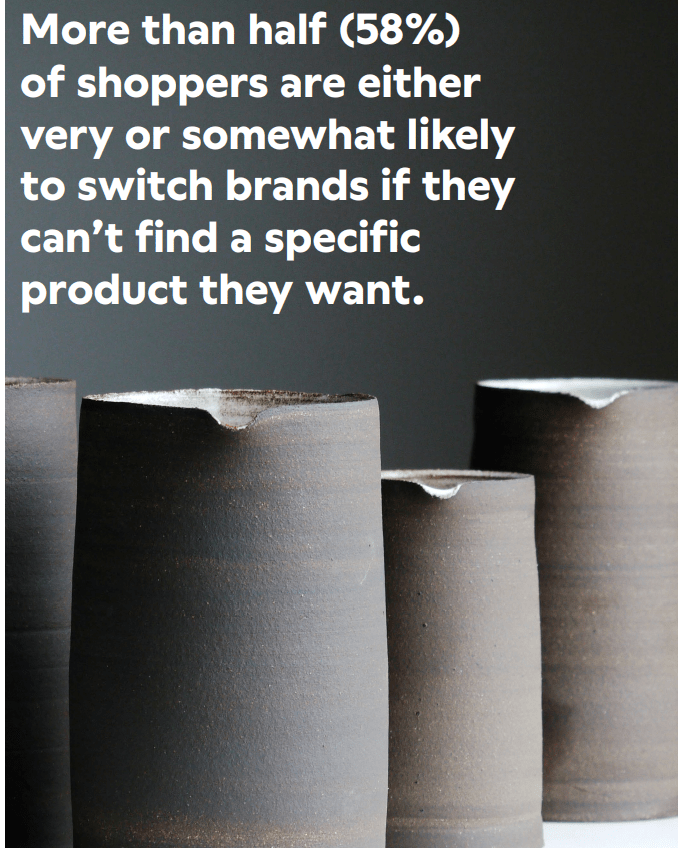
We commissioned OnePoll to
conduct an independent survey
of 6,000 online shoppers from
across the US, UK, and Germany
to share what they think about
poor product information,
availability, and findability.

As Above

There are a whole bunch of reasons why these surveys have come up with these sort of results. One, which is certainly relevant for me, is often whatever I am searching for , I don’t know of any
significant brands. I want to see whatever brands are available or more simply I have not the slightest idea of what I am looking for. At this very moment I have no doubt there will be a whole raft of consumers out there looking for Wifi Connected Swim suits so they can remain
connected whilst sunning themselves in the Mediterranean Sea and are not separated from the internet . They wont know who makes them and certainly not the brands. No, they don’t exist (-yet and yes I have checked ) but I think it works as an illustration.

Within our own industry (ie Party) a major latex balloon manufacturer’s brand has dominated the market for many years. And for good reason. They produce an excellent product and they invested heavily in marketing. However, a change happened during Covid (yes its that word again) . Supply disruption occurred. The market needed product , as there was huge demand and they found alternatives . The alternatives were found to be more than acceptable replacements . The consequence was a major distillation of the brand and a huge increase in product choice.

This effect migrated into other party products. Retailers reliant upon major brands could not get the stock they wanted started to look at other Brands who had stock. Hey Presto ! They suddenly discovered that there were other good brands out there and the product was just as good and sold as well if not better.

As above

I am not knocking good brands. I have spent most of my working life trying promote brands in various market places . My point is that I think ‘professional’ consumers i.e. `buyers should re-evaluate the brands they rely on and ask themselves are they really getting value for money . The amateur buyer i.e. the end consumer , according to the research seems to know better ……

The Future Consumer ….

The current UK government will have redesigned the future consumer as a very svelte like creature arriving at our gleaming, but empty, shopping centres in vast swarms of cycling health freaks. Some would have arrived in electric cars but they had not managed to build any charging points. This scenario having evolved from their policies on reducing obesity. Naturally, the whole concept will be inspired by ministerial cars being replaced by high performance racing bikes, or maybe E Bikes.

Reality is a little more complex. Most businesses (involved in selling products to consumers) spend a great deal of time looking at what the retail landscape will look like, what the future trends are, the economic future , spending habits and ways to market. Yet do they actually look at what the consumer will look like (metaphorically speaking) ?

It came as a bit of a surprise when looking for research there is not much going in . Or rather there is , and always has been, a lot on consumer behaviour but not on the holistic consumer. By this I mean, the whole package . That’s is to say behaviour, social interaction, physicality of the individual, thinking process, social awareness , family sizes, cultural approaches , education, spending power, in effect everything goes to make the everyday consumer. Yes there is plenty of research in each and everyone one of these components and I know most major retailers have some form of futurologist within the organisation. However, there seems to be little which really looks at the complete person, In so far as there ever can be such a creature.

Hence I was somewhat, initially pleased, but ultimately disappointed when I recently, read a report by an Organisation called Raconteur.net publishing a report called The Future Consumer. It spoke at length about the future consumer but much of this was based upon the effects of Covid. I would not hesitate to accept that Covid will have had an impact on the Consumer, I am not convinced it is the comprehensive Shape Shifter it is being described as. Yes, it will have moved a additional sector of society into shopping online. Yes, it will have made an impact on the way we work (though once again I am not thinking this will be as long lasting as suggested. See what happens to those working from home during a miserable winter. It focuses on and suggests fairly nebulous plans about connecting to the consumer.

Craig Inglis ,Chair of the Marketing Society Raconteur..the Future Consume. September 2020

There are other influences that go beyond Covid that are just as powerful in shaping the future consumer, Environment, climate, technology, education and wealth to list just a few. Covid has, to a degree, brought forward the timeline. There is no doubt that a section of society that were new to online purchasing during lockdown will remain online. But not all and furthermore they will not buy everything online. Those starved of the retail experience, apart from queuing outside supermarkets, suddenly missed the ability to go to shop.

I am not convinced that the issue of working from from home or rather the desire to work from home is quite as strong as all the pundits claim. Yes, there will be a change but not as big as big as people think(see previous paragraph). Climate and environment is in a very confused state as the consumer edged back to using cars as public transport was deemed unsafe.

Wealth, health and education all being linked. In that those who have a good education, tend to be wealthier and healthier. The sum effect does throw up some light for good independents, in the more affluent areas of society. The consumer has become aware of its good local independents . They have got (or at least some of them) have got used to walking to them and seeing their offer and being surprised (positively mainly , I think) . The combination, perhaps of working more from home, and in walking distance provides opportunities for the good local independent to connect to this ‘new consumer’ and build relationships that will help their business to flourish long in to the future. The less fortunate, invariably have a poorer choice of independent, if there is any choice at all. So no change there then, the less fortunate become even less fortunate.

So many retailers, amongst those some of our biggest have managed to get their predictions of the Future Consumer so wrong. M&S has got to be at the forefront , their decline started way back , probably at least fifteen years. You just need to look at their approach to online, having only just got their food offering up and running , then only a small part of it and then only through a third party (Ocado). Even the big supermarkets grossly misunderstood their customers potential behaviour when the European discounters first came to our shores (Aldi, Lidl). Consequently they are all only playing catch up.

Hands up, this is not an easy game, predicting the future consumer . You could say that there have been few that get it right. Like it or not Amazon is perhaps the one that stands out. Twenty three years ago, Jeff Bezos (technology achievements aside) seemed to know what the consumer would buy into, in the future. But then I am not sure it is rocket science (or even technological science) convenience, consumer confidence, value pricing and above all the consumer experience, are surely precursors to those who wants to retail. There are those who argue, quite rightly, that he (Bezos)does not care about much else, but we are talking about consumer perspective and here he wins hands down.

IKEA is perhaps another. When they first expanded there was plenty of flat pack furniture around but not in the way that IKEA envisaged it. Nor in the environment they created . ‘The plenty’ no longer exist . IKEA enabled the consumer to visualise a new environment and consequently helped in developing a new consumer . The same perhaps could be said about Terence Conran(in the UK) in the sixties and seventies. Not that he sold flat pack furniture but he saw how the furniture consumer was changing . Unfortunately, when he sold the company, the new company did not continue with that vision. But Conran cannot be considered a global shape shifter moreover his influence was on a relatively small sector of the market. I suspect there are few consumers, in the developed world who do not know of Amazon or IKEA. There are, of course, other future proofing brands available. Those non future proofing may not be around for as long as they think.

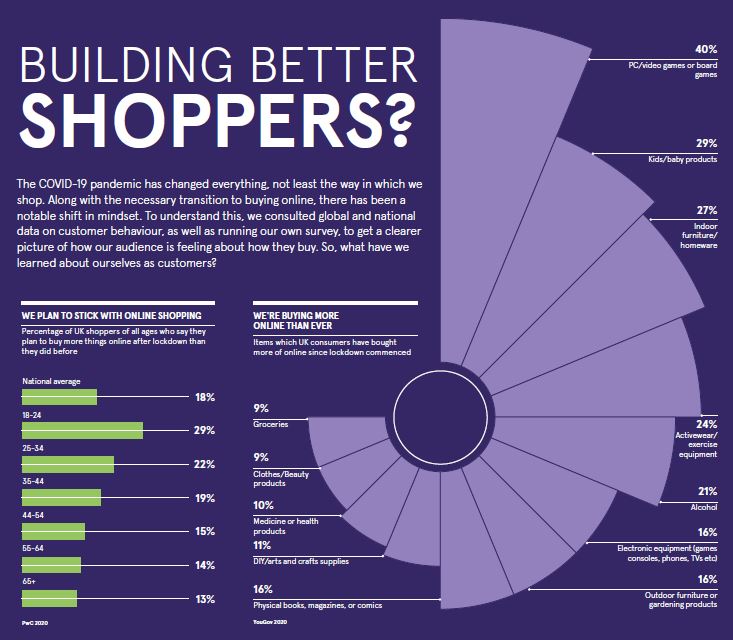
Whilst gently lambasting Raconteurs research , I did feel the diagram below was helpful in illustrating some of the effects of Covid on the existing consumer and data such as this, needs to be considered when looking for the future consumer

Raconteur..the Future Consume. September 2020

There are no options. Or rather there are two. You do nothing or you at least take the opportunity, especially in the current climate, to look around at the changes you can see happen in front of you and take a view on what may happen. Back to no options. If you do nothing , nothing will happen or rather , as sure as eggs is eggs, things won’t improve there is a very good chance they will only deteriorate. If you look around , make some guided assumptions and act accordingly, you have an opportunity, if not to get ahead of the game at least keep up with it.

Consumers, by definition, include us all

John F Kennedy

That being a truism, we all change, develop and evolve . As we are all consumers the same principle applies . If we wish to sell stuff to ourselves we need to have some idea how we change and develop. If as a retailer you don’t someone else will .

Now, more than ever, retailers have got to look long and hard and what tomorrow’s consumer is like. For those that don’t it will not be difficult to predict their future, however short lived that maybe.

To Mask….or Not to Mask? A very serious question.

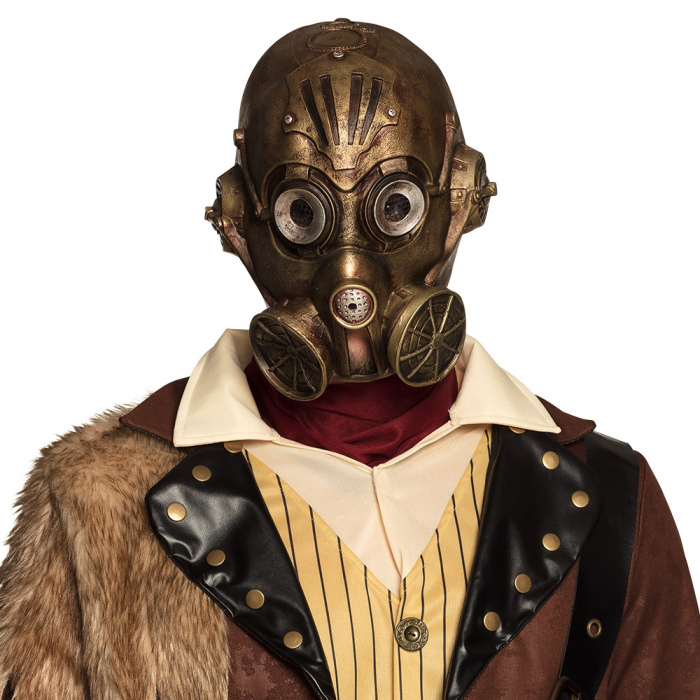
Unashamed bit of product placement ! This should sort out a bit of protection. This will get the High Street moving (but perhaps not in the way we want). But it would look great on a Zoom (there are other makes of online Video Meetings !) Meeting.

This is not about the rights or wrongs of wearing a mask . If science says that it is of benefit then I accept it. It is not about our personal freedoms or civil liberties, if wearing one protects others then we should. However, why haven’t we been told to wear them 4 months ago. Why was it not made mandatory immediately as opposed to waiting 3 weeks from shop opening? Businesses were already prepared, it is only the consumer who had to get prepared (like go and buy one. That said there is huge confusion as to what sort of mask actually works and what not to do if you do wear one) ). The science evolves so say the Government. Well how come it evolved a darn sight quicker in the rest of the world.

My argument is to look at the reason why they have come up with this late stage retail requirement and its possible impact.

I can think of only 3 possible reasons for the mandatory wearing of masks within stores:

  1. Public safety
  2. Political
  3. Economic

One hopes number one is paramount. Well, as we all know you don’t have to wear them in bars or restaurants; somewhat impractical. However, if there is a risk of infection you are likely to spend a lot longer in a bar or restaurant and even with social distancing more likely to have interaction with strangers, than you are in a shop. The new regs state that store staff don’t have to wear them . If we are to accept the science that the mask is to protect 3rd parties are we to assume that store staff are less likely to have the virus than the store customer ? I don’t think science has made that claim. So I am not convinced that Public safety is number one or if it is then I think this a bit arse about face. Which of course would surprise no one.

If it is number 2 , Then I am perplexed as it can’t see much political gain here. Perhaps there is enough pressure about the Government’s mixed and cockeyed messaging that they thought they should align with popular opinion. Assuming popular opinion believes that it is a good thing.

Number 3 sort of makes sense, if they think that it will give the consumer more confidence to go into shops and spend. I don’t. Yes there are naturally those who are very concerned about their unmasked fellow shoppers. Yet my gut feeling , and subjective research suggests otherwise. Non essential shopping is partly a leisure activity and I am pretty certain it will stop the consumer going for leisure or casual shopping if it involves masks.

It’s the don’t have to , and it is not much fun so I will get it online attitude , that will only push more consumers back onto online and not go into the retail store. There will be, of course, those who will be more confident in a masked up situation, but I still feel they will be far outweighed by thinking I really don’t need to do this. So I wont.

There is a lot of confusion out there with the consumer, and this is not helping and one thing about which I am pretty sure it will not help the retailer.