
Where’s Woolly ?

Print

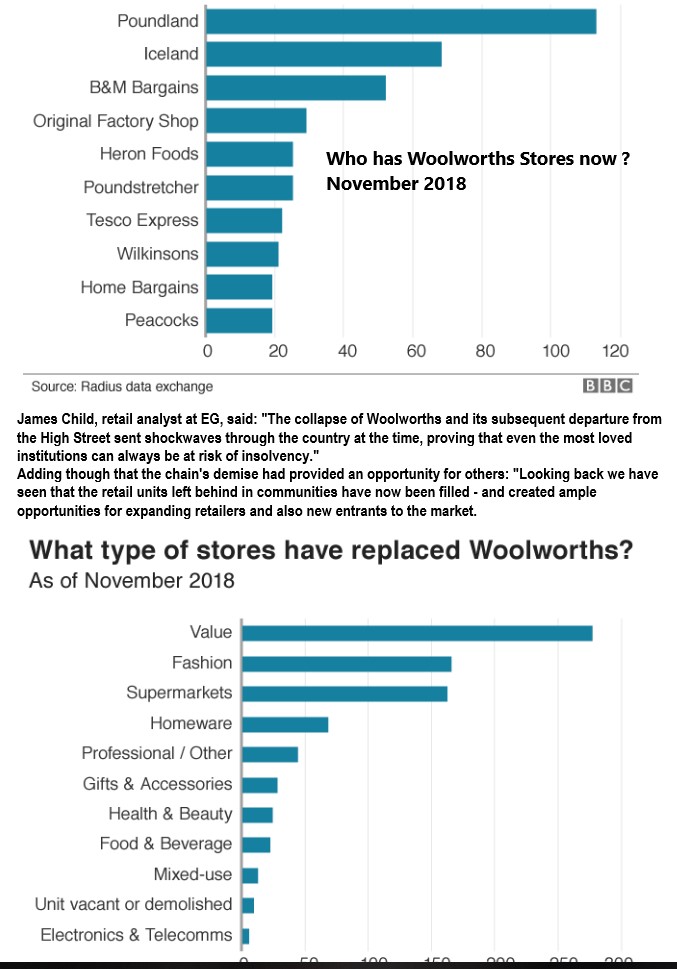
Or rather where are the old  Woolworth stores now ? I try to avoid plagiarism (or at least most of the time) but I noticed a short article on the BBC web site that I felt was of interest and by copying pasting told a story without any unneccesary embellishments.

wooloworthsblog

It is sort of good news , in that we readily assume that when a chain such as Woolworths folds, it leaves big holes in the High Street. However , with the likes of BHS and the same will be true with the House of Fraser, there will be larger holes that will not be filled or unlikely to be filled with retailers. It does make you smile, when so-called retail analysts refer to the likes of Woolworths as being much ‘loved’. It’s because they weren’t much-loved that they failed.

I think that what it does illustrate is that Retail environments will continue to evolve. What we see today is very different to ten years ago, as it is was ten years before that and so on. My own little shopping parade of about twenty retail outlets (suburban London) , has gone from losing an original Sainsbury’s to now having a Sainburys local with a thirty-five year gap. The loss of a small department store over thirty years ago , eventually replaced with an electrical store, a beauty salon and a bank (the only bank after having had three).  The last five years having had a lean period where there have been failed restaurants, a closed post office , an iffy wine shop, to now having a very smart deli, two very succesful turkish restaurants, and quite possibly a M&S foodhall.

It’s a bit like the extreme electrical storms that hit the African bush and create huge wild fires. It burns off the old scrub and allows for new growth. Regrettably, our storms, whilst not electric, are rather longer lasting , and do not have the benefit of new growth created by nature. Nonetheless, change happens and there will always be casualties. It is the ability to foresee those changes, adapt and work with the opportunities those changes create. Easier said than done? Sure, but I don’t think you’ll find any successful retailers, in the entire history of ‘shops’ that would say it had been easy .

Brexit Update….(perhaps most overused title in the U.K. media )

Firstly, let me repeat that I am a remainer, who voted remain, accepted the result and just wants to move on.

Secondly, I have said before that there is really no such thing as a Brexit update as it meaningless and still nobody has a clue . I would go further and say, that with every day that passes everyone has even less of a clue.

Thirdly, it’s my version of an ‘update’ relating to a particular situation that is determinable (as determined by me).

Over the last twelve months various customers have said that Brexit had effected spending within their stores. For a while I doubted this , feeling that there were other factor’s in play. However, recent discussions with various retailers , there has been a common thread, paraphrased as follows …

Many of my customers that come into my store,have said that due to their concerns about Brexit, they are not going to spend as much…

So there you go, it’s not scientific, but is being repeated too often to be ignored . My Brexit update is that it is effecting consumer spending, or at very least , with my customers.

That’s it , short, concise and to the point. Factors that do not apply to anything else connected to ‘Brexit ‘. Gotta to be a first.

Sorry , one last thing, an itch I have wanted to scratch for the last twenty four hours. Perhaps the most brilliant and innovative political thought that has occurred since the Greeks came up the idea of Democracy . Bozzo’s idea of a Minister of ‘a no deal Brexit ‘.

When someone is appointed as a Minister, they may have an interest but little knowledge about the area over which they preside. The Minister is able to function (?) because they are supported by a group of civil servants , who have some experience and a level of knowledge . So ‘Mop Head’ is proposing a Ministry , where not only will the Minister have no idea is happening, nor will the civil servants. Then, they can issue daily updates on how nobody knows anything about anything to people who already know they don’t know, so everybody can be as unprepared as everyone else. Brilliant and flawless!

Tears for Sears !

sears21

Whenever major commercial organisations collapse, those that suffer the most are, invariably, those that can least afford it, the majority of its employees. In 2005, through a merger with Kmart, there were 3500 stores. When it filed for bankruptcy several days ago it was down to under 900. Another retailer collapses only to illustrate that the problem is not confined to the U.K. High Street.

Galeria Kaufhof, is a German chain of mid market department stores. There were over one hundred stores in the chain . In 2015 it was purchased by the Canadian organisation ‘The Hudson Bay Co ‘. In September of 2018 , it merged with Karstadt another German mid market department store. Immediately, five thousand employees lost their jobs. Why has this happened? For very similar reasons to that of Sears in the USA and House of Fraser in the U.K.

What are these reasons ? Senior management of all of these organisations lays the blame fair and squarely on the changing habits of the consumer and the increasing level of purchasing from online operators.

I believe that hides an underlying laziness and negligence on behalf of these organisation’s senior executives. I am quietly confident that they were well rewarded through the good and not so good years and the consequences of their actions (or inaction) is rather less than those on the shop floor.

Whilst online competition, increasing costs, and a changing consumer, undoubtedly, has an impact , the question has to be asked ‘what is the purpose of a department store ?’.

The simple answer would probably be they offer a variety of product and brands all under one roof. Yes they do. However,  the variety and the extent of each brand’s range is very generally very limited. And what does today’s consumer want ‘ Choice ‘ .

Could the executives of these organisations have done anything about it?

Sears

It beggars the question as to what the Directors of both Kmart and Sears were thinking back in 2005. The former was a chain of discount stores and Sears a mid market department store. It’s a bit like merging John Lewis and Lidl. It just didn’t make sense. The merger meant an immediate loss of jobs and the consequences are even more job losses.

Kaufhof & Karstadt

This all makes a little more sense , they are similar operations and a lot of synergies, but the question has to be asked , if Department store Shopping is falling out of fashion in Germany, why do two mid-sized chain think they will be anymore successful as a giant chain? Karstadt was bought out of insolvency in 2009 and Kaufhof were saved by HBC (Hudson Bay-who in turn are owned by Metro AG).

House of Fraser et al

By ‘et al’ I mean the likes of Debenhams, John Lewis is a little different even though it has not had a good financial start to the year. Debenhams has just announced nearly half a billion in losses and plans to close fifty stores over the next three to five years. The question facing both the House of Fraser and Debenhams, is are they wanted by the consumer and what have the boards of both companies been planning over the last ten years. Initially, it seemed that opening more stores was the option of choice. But I wonder whether these were project vanity or project growth . Many of the stores of both chains looked like they had not had a lick of paint since the millennium. In my opinion they sought growth above investment within their existing estate. Perhaps, what is more to the point is that over recent years they have both undergone various management changes , ensuring lack of continuity or long-term planning , but no lack of senior executives with ever-growing bank accounts.

The over arching question is there a future for this type of store ? I think the reality is with the exception of a few speciality aspirational stores like Harrods and Selfridge in the UK and maybe Neiman Marcus and Macy’s in the US, not really. They try to sell lots of product, but with not with any range or any level of service and invariably not especially competitive. Could the management have done anything to change this , in my opinion ‘yes’ . But it should have been done ages ago. Instead of constantly look for growth through more stores, they could have invested in a far smaller number of existing  stores making them special places to shop, a truly destination store, a place to spend time and money and have an ‘experience’ , not just a big place selling the  same as everyone else. They should have invested in staff and staff training and finally invested heavily in their  online offering, which is generally poor and too late.

Apart from the loss of jobs by employees and creditors , the biggest effect of these type of store closures is the impact they have on local independents. Despite the drop in footfall in the likes of House of Fraser they still bring shoppers into that High Street or shopping centre.  When they are gone it frequently leaves a gaping hole and the remaining independents are made to struggle even more . There are, also, quite literally structural problems as ween a Department closes down the property stays idle for a long time. They are large, usually over more than one floor and because of the layout cost an arm and a leg to reconstruct so that it can be re-let.

Retailing ain’t easy, never has been, never will be . The old cliché is that if it was that easy everyone would be doing. I, sort, of think that is what happened in the early 2000’s . Loads of big retailers thought they could make money just by opening new stores. They were wrong but those who made those decisions generally did not pay the price…..

any amount of political meddling, central or local,whatever form of taxation , no matter how well intended will not have had any impact upon these retailers past present our future. Much of what has happened has been down to poor and short-sighted management . I repeat a figure I posted a few weeks ago…Amazon’s budget for R&D for 2019 is well over £20 billion. I am not sure whether any of the above have had a R&D budget of any amount in any year !


Master plan to revive the High street!

Politicians of all shapes and sizes ,in most democracies, are hypocritical, back stabbing, truth bending , vain egotists. As much of my political information comes , in some form or other , via those sources and I really don’t think my political opinion is worth diddly squat. However , I was somewhat taken aback the UK’s ‘esteemed’ labour party on their recent five point policy  announcement on restoring the High Street. Point by point:

  1. Free pass passes for the under 25’s. Wow, that’s a cracker. Here’s a scenario

Hi Guys, how’s about this for an idea now we have free Bus passes ? Before we go clubbing on Saturday night, we all shoot down to the High Street (‘what’s that’ is the cry?) and whip into the Co-op for little snacks and then off to WH Smith, to buy a couple of magazines (What are they? someone whispers at the back of the group) . Oh and maybe get a bottle of pop! (‘Amaze balls’ they all scream!)

2. Free wi-fi on the High Street.  Would be really good if you ignore that virtually every cafe now has wi-fi as have the majority of high street multiples. I suppose if the plan is to get the youth to congregate in former wifi black spots away from the shops then there might be a point as they could all gather in a dark alley and download porn together (ps. A lot of high streets have street Wi-fi and it makes absolutely no difference – not to porn loading, that I know of, but the number of people visiting.)

3. Ban ATM charges , Bank & Post Office closures. Perhaps not a bad idea if it was done five years ago. And how would they propose that they legislate that a private organisation such as a bank has to have a branch in a certain location and which bank would be in which town . What is the definition of a High Street ? Do they all have to be in all towns ? What if your bank is not represented ? Scenario 2. Banning ATM charges, great idea except there will be less of them and with the continued decline in the use of cash, unlikely to be a winner.

Elsie, there’s a new post office opened up in the High Street shall we go there to collect our pensions (yes I know that doesn’t happen more !) shall we get the mobility out and pop down collect our cash then spend it on some new clothes from that Countryside Clothing Store.

Nah, George, that closed last year and anyway the range was old-fashioned and didn’t change much . And its raining! Sod ’em , I’ll get what I want from Amazon….

4. Registry  of landlords. This is working on the assumption that High Street  landlords are trying to hide the properties they have to let. Methinks they probably would like to let them. And me also thinks that if you want to lease a shop you might have an idea where to start looking . If you don’t you ain’t going to make it as a retailer .

5. Business rates. A good idea !! Not the rates but getting them lowered .

So I suppose one out of five is a start but not an auspicious one. Maybe its ‘blue sky’ thinking and not understanding that most of the time the U.K. doesn’t have blue skies. Oh, sorry can’t be blue must be red . That’s even less auspicious if we are thinking morning is when shops open . The really unfortunate thing is that if this is the best her majesty’s opposition can come up with, then retailers are going to have to continue to rely on their own wit, as no politician has come up with any response to the problem that is remotely helpful .

I would go further and suggest that part of the problem with the High Street is that politicians of every variety , both local and central have a lot to answer for over a number of decades. Piss poor planning, seduced by major operators allowing land banking by the ‘biggies’ to stop competition, ill thought out parking schemes, and a total lack of understanding to the locals needs as opposed what incoming developers, with fat wallets, think they need.

Politically, it has to be think ‘Local’. Central Government will always have a role to play but the real answers will have to come from Local Authorities and even then it has to be micro managed. Cardiff is not the same as Caerphilly, Coventry is not the same as Whitley, Carlisle is not the same as Dalston, Chelmsford is not the same as Maldon. Each pair of towns share a metropolitan authority which makes decisions based on the seat of the local government. It, rarely, takes notice of the smaller urban locations within its remit and invariably ignores their specific needs. Regrettably, I think this is a bit ‘pie in the sky’. Yet with the rapid change that’s occurring Local authorities have got to get to grips with what’s going on. Central Government can have an influence but whatever it does will only ever be broad-based. That will never be enough to rejuvenate the thousands of High streets that are at risk.

So here’s some simple suggestions….

1. Local (and that means very local) must talk to, but above all, listen to their good local independents and potential entrepreneurs

2. Good local independents & potential entrepreneurs must insist on talking to their local authorities.

3. Central Government, apart from broad intelligent policy and a favourable taxation climate steer clear.

Fat chance of any of this happening. Nottinghamshire Council has just announced plans to develop a ‘super council’. Super doesn’t mean ‘great’ , it means ‘giant’. They want to scrap district and borough councils .

Politicians , rarely, have any good ideas. They ,never, have any great ideas.

So, Retailers don’t rely on a politician coming to your rescue anytime soon.

Jack and Jeff….2 new guys with new ideas on the High Street ?

See the source image

Jack and Jeff, Jeff and Jack , whatever, they are not really new, actually one is quite old and dead the other not so old and nowhere near dead. Jack is the new Tesco discount chain, named after its founder Jack Cohen and Jeff is none other than Jeff Bezos, the richest man in the world (in cash terms anyway , but whose counting ?). What is new are their plans for the future.

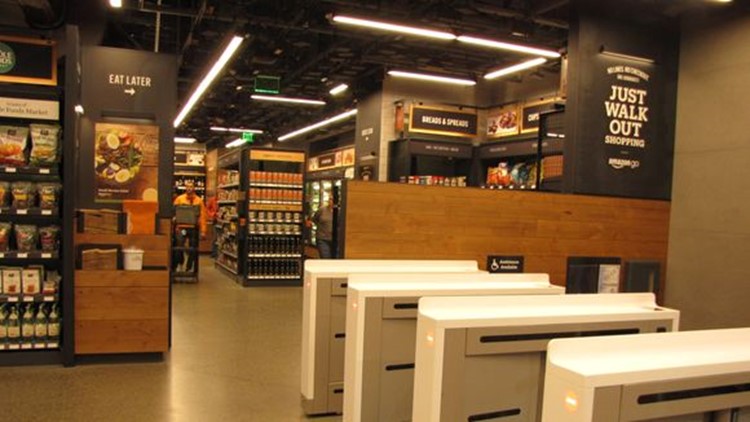
The latter has announced the possibility of opening 3000 cashier free stores by 2021. The concept is not new for Amazon has they opened their first Amazon Go store in January of this year. If this comes to pass its impact (USA only to start) will have as big if not bigger impact on US retailing as Amazon online. Bricks and mortar Stores are not new to them, as they currently have 500 Whole Food stores and 20 Amazon Book stores.

To quote…..

This move would be both astonishing in its effects on communities and potentially a neutron bomb to everything from existing convenience chains like 7-Eleven to quick-service food stores like Subway and even entrepreneur-owned restaurants and taco trucks.

Digital Trends

and in context (within the USA)

Opening 3,000 stores of any model would put Amazon head to head with some of the largest brands in the world. By comparison, Kroger operates about 2,500 stores under a variety of brands that generate sales of over $100 billion. There are a little over 3,500 Walmart locations but they’re mostly located in suburbs, away from the dense urban areas and affluent customers that Amazon is targeting with Amazon Go.

The impact goes way beyond other retailers, it will impact socially, in terms of both consumer behaviour and future retail employment such as eliminating a whole sector of workers within every store eg cashiers. If there are any chinks of light , the concept will be focused on urban centres and it illustrates the Bricks and mortar store is not going away soon, albeit it may look a little different.

Back to dead old Jack and the UK. Jack Cohen and his baby Tesco, could be seen to be , or rather was most probably the biggest retail innovator in the UK ,of his time. He learnt much about a supermarket concept, from visiting self-service stores in the US. Over recent years the chain has suffered both sales and profits from the grocery discounters. Strangely Aldi and Lidl were not the first in the UK as in 1957 Kwik Save was founded and was very succesful during the seventies and eighties but went pop in 2007. Yet as they disappeared so came the Continentals and carved themselves a healthy piece of the pie. Jacks is apparently the answer.

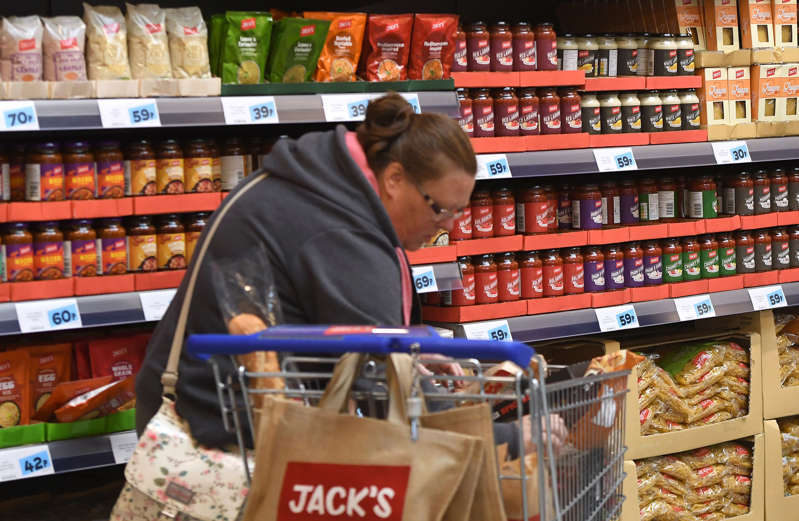
It maybe, but I am not so sure .Rather, let me qualify that. Jack’s may serve as a succesful defensive tactic but it is hardly revolutionary and may  only divert some business away from the mother ship.  Not having been in one yet(Jacks that is not a mother ship, though I can lay claim to having been in a Tesco’s once or twice ) the images suggest a discount store, as it should, but the consumer will  also see it as Discount store that belongs to Tesco.  I am not sure this a very innovative approach from our leading High street retailer ,partcularly when the Retail High Street is facing a rapidly changing future. If I were to compare the two approaches , Jeff is looking to build Retail space stations and Jack’s (aka Tesco) is to stride into the future based  on the founder’s original concept of a permanent market stall.

Jacks idea of the future  ??

Or Jeffs ??

Image result for amazon cashierless store

Whilst Amazon looks globally, Tesco focuses on its home territory, at least recently as it has had to hold back on its global ambitions not achieving the success it craved . Therein, lies part of the problem with Jacks. I see a twofold problem facing many retailers both big and small.

1. The online operators are seen as alternative retailers. Of course, on one level they are. Yet many especially the likes of Amazon are not just retailers. Retailing is just one aspect of their model. They are at worst disrupters, at best enablers. By disrupting they have completely caught major retailers napping, and they really don’t know how to respond. By enabling they have created many entrepreneurs to create businesses and consequent wealth by using the structures and facilities that have been created by the likes of Amazon. It is a much more complex model than that of a retailer, but I will probably come back to that at a later date. What is relevant is that traditional Retailers only seem to know how to respond with traditional retail techniques, which to me seems like building straw sea walls.

2. Being big and thinking small, can at times, within retail, can be a virtue. By that I mean big is not always beautiful. But being big and thinking small , in a parochial fashion , is a retailing vice. It leans towards being reactive rather than proactive. In this situation it is Tesco reacting to the offensive by discounters by opening discount shops . It may work in the short term but it is not a long term answer. It is most definitely not a vision of the future (retailing future, that is ).

Where would I put my money. Well, let’s put it this way , if Jack was alive today , apart from seeing his name on the door , I don’t think he would be over impressed with what was behind the door. I suspect he would be thinking “is that the best they could come up with…”

Stick Vat up on online operators….that’ll sort the High Street….Not!

A report has just been published suggesting that the government should raise VAT to 22.5% for online sales and 15% for High Street retailers. The author of said report is a company called Collier International. For those who don’t know who they are , and I didn’t, they are a very large Canadian Real Estate company with property interests worldwide including the U.K. where they are especially prominent in shopping centres. Well no surprise there then. Another report suggests a 1% online tax would generate £5 billion which would enable a 17.5% decrease in business rates. All this and much more besides would even up the playing field. No it wouldn’t. They all miss the point and don’t seem to understand the basic mechanics of what is actually happening out there.

Let’s first of all put aside Amazon. It’s difficult because of their impact but we all know they are big enough and smart enough to tackle any reasonable obstacles that come their way. Incidentally, they are budgeting £26 billion for R&D in 2019 .Many multiple retailers don’t even have a budget for research.

There is a huge assumption that online operators succeed because they have the advantage of lower costs of operation. Well if they are operating from their bedroom they might. Every other operator tells a very different story. I speak to some  form of online operation most days. So I think I get a broad view of what the issues facing them are .

First of let’s look at what they don’t have…loads of costly leases. As they don’t have several trading locations, neither do they tend to have crippling business rates associated with multiple outlets. Because they, generally,don’t have a shop or shops, they don’t have a building shouting their name to their potential customers 24/7/365 . They constantly have to pay(in various ways) to ensure their brand is consistently uppermost in the mind of  their targeted consumer. This cost alone, to the small and medium size operator can be crippling on its own.

What they do have are large costly warehouses, huge stock holdings, constant pressure to keep their IT systems up to date, aggressive pricing pressures, sometimes this is quite literally minute by minute, shipping costs, much higher rates of returns , the continuous drive for even more rapid deliveries and free deliveries. Unless they are working from the bedroom , they have business rates just like anyone else. Few operators make little or no profit in their early years as they have re-invest  to survive .

Politicians, advisors and research bodies seem to rarely pay heed to the results from unintended consequences. If the Government were to heed the advice of Collier International and the policy did indeed re-invigorate the High Street, then more product would be purchased at 15% than at 22.5% or even 20% creating a vast revenue shortfall for the Treasury. Anyway it wouldn’t have the desired effect and it would only make matters worse for all forms of Retailer as well as the Treasury.

Furthermore it is  a discriminatory policy as there are now sectors of society who rely on online purchases. Those living in remote rural areas, the disabled , especially those with mobility issues. Just because a consumer wants to buy a product that shops don’t want to stock should they be penalised with a VAT rate increase? If a consumer buys a product through a High Street Retailers web site and collects it in the store, which rate of VAT would be charged?  The idea is completely bonkers but more importantly misses the point.

On  a micro level business rates need to be reformed and  local bureaucracy needs to be challenged . At the macro level Government(s) need to reassess major organisations ability to legally avoid fair and equitable taxation . Not just the Giants , such as Apple and Amazon, there are those a lot closer to home who seem to escape the Taxation limelight ( the likes of Phillip Green . the Barclay Brothers and the Richard Bransons of this world -my pet tax avoiding dislikes amongst many others within the UK).

The point they seem to be missing is that the Retail landscape is and will continue to change . You can’t nudge it backwards. That benefits no one. Imaginative policy and structures have to be created to accommodate change and not rail against it. The High Street will always  change . Unfortunately, there will be those who suffer but that has never been any different from the advent of the first Supermarket chain, the first shopping centre and shopping malls, the introduction of mail order shopping and even something more structurally basic as when the newspaper industry decided to supply Supermarkets and the consequent closure of many High Street newsagents. I did not see any Government intervention then. Yet I fail to see any overall strategy and understanding as to what has been going on for donkeys years, apart from knee jerk reactions that invariably make the problem worse.


Is this the future of Shopping Centres ?

The High Street maybe dying, Shopping Centres struggling but there others who think differently. And thinking differently being the operative phrase.

Emaar Properties and Dubai Holdings have announced plans for an 8 million square foot of leasable Retail space in none other than Dubai. It will be the largest retail complex in the world . Much of it will be ‘Dubai’ like with water parks, ski slopes and artificial moon landings (joke) , theatres, and numerous entertainment centres. It is, however, the technological retail dimension that I believe could have a bigger impact on shopping centres worldwide.

The plan is to develop the retail environment using very cutting edge technology, including radio frequency identification (for checkouts), specifically designed apps, latest bar code scanning techniques, ability to purchase through desktop pc’s , mobiles and run of the mill checkouts.

Do I think this will be emulated in the U.K.? Do I think the Metro centre and Meadowhall in Sheffield are going to reinvent themselves and suddenly deter tourists from flocking to the Middle East ? No, ‘cos Sheffield and Gateshead ain’t figured out the sun and sand bit yet. However, much like the High Street but for slightly different reasons Shopping Centres will have to reinvent themselves.

There are signs that this has started to happen, as many have cinemas, numerous restaurants and in some cases casinos and hotels. Yet, I don’t think this is enough and the developers will have to be a lot more inventive to curb the current decline. As Department Stores are closing down at a rapid rate , the Centres are loosing their corner stones. For many years the attraction for many retailers looking to lease in a shopping centre is who are the anchors eg John Lewis, Debenhams,House of Fraser etc. much of the problem with shoppping centres is they have often been a reflection of a Department store trying to be many things to many people and in the end not really offering anything that anyone wants.

Shopping centres face further challenges to that of the High Street. The issue of high rents is, as I understand, underpinned by the Landlord and its investors. The financing of the Centre is based on the rent returns based on historic high values. Until this changes there is going to be no reapraisal of rentals anytime soon. Consequently they are going to have look at what they offer . For the foreseeable future there are not going to be more Retail stores, or certainly not in their current format. Hence they will need to attract new revenue streams from the entertainment and leisure markets.

There is, currently, one example in the U.K. which maybe gives a hint of what is to come . I am not sure they have got the mix right plus it is a bit of bolt on job to existing facilities but at the NEC near Birmingham, you,now, have an exhibition centre, entertainment centre , retail shopping centre, casino and this year Merlin entertainments have added the Bear Grylls adventure park. Because of its bolt on , ad hoc development nature of the NEC, it is all a bit higgledy piggedly. But nevertheless, it is an interesting direction of travel.

Another issue they face is that there is a fundamental structural problem, which is, perhaps a far bigger wall to climb, and that is their Structure. They are huge great monolithic beasts. It is like turning an oil tanker on a ‘sixpence’ (look it up if you don’t know what that is- and shame on you). In their present format there is little that could be done to adapt them for the next thirty years apart from knocking them down. In a way they are much like their historic cornerstones, the Department Store. They tried to be all things to all people and for a long time and whilst there was no alternative it worked. The alternatives are here and they are beginning to not work (Shopping Centres that is). Or certainly not as much the owners would like.

It maybe that some will be completely redeveloped. It is more likely that they will have to be more like the Dubai model. They will have to be cutting edge in terms of the experiences they offer and far more in tune with tomorrow’s retailers. Currently they can do neither. Redevelopment alone will be not enough for most . If the Meadowhall’s and Metro Centres of the future are to be successful and last another thirty plus years they will have to be completely rethought

If zip lining from the car park to Primark, having your purchases delivered to your home on your return, dining at a vast variety of international cuisine, losing fifty quid at the black jack tables , followed by a virtual concert of Elvis Presley, Aretha Franklin and David Bowie and returned via a completely dry water Shute to your electric auto thing, does not float your boat. Then you’ll probably have to stick with shopping at your local Amazon store.

Brexit Update ……….Utter Tosh !

Brexit

This is a rant ! I have made it clear from  the beginning that I am a remainer who accepts the referendum result, consequently I am not going to drone on about whats good or bad. However, I will rant on about the one constant head line or title throughout this exercise and that is ‘Brexit Update’.

From Day 1 or 2 (depending on how you count it), there has been a continuous flow of absolute garbage. No matter what side of the fence you may sit on it remains as garbage. Nothing has been updated because there is little to update. Nobody really knows from day to day what is or has happened. If it does, a week later it is denied, changed or the other side says something like ….that is not quite what we meant….

Before, I go any further, there is something even more distasteful and that is ….what Brexit means for you…..all the media, journalists, politicians, social media, on a daily basis offer advice as to what it means for me and sixty five million other Brits. So how do they know ? They don’t , they haven’t a clue, it is all hypothecation at best. And each and everyone of them has a different proposition. Is it helpful? Is it heck. More to the point it is distinctly unhelpful. The majority of politicians, journalists and bureaucrats of all hues, are following their own agendas and have no concerns for the wider populace.There will be those who take notice, only to be completely confused because shortly afterwards they are told something completely different, by the very same person who told them something completely different the day before.

Please will somebody out there tell me, what is that makes this large group of uninformed (because there is nothing yet to know. The playing field keeps changing and who, as in been involved with any serious negotiations, tells all around what they are actually discussing ) think they are being helpful?Perhaps, there are some who can pre-plan and need to. A bit like Y2K ( the millennium bug,that wasn’t) there be a host of ‘consultants ‘ who will profit handsomely, from universal ignorance. Journalists revel in the ability to write about bucket loads of ‘ifs and maybes’ because there is nobody to prove them wrong. Politicians are having a ‘hay day ‘ as they keep their heads down whilst all around them chaos reigns.

That’s it I have ranted ! But I have one last question, and I want to underline that I am asking this question as a remainer….

Dear Mr Barnier, why are you conducting these negotiations on the premise that you cannot allow the U.K. to leave on too good a deal as everyone else will want to up-sticks and leave . Surely, if the EU were that bloody wonderful, your strongest hand would be that the U.K. can leave on favourable grounds and remain confident that the remaining members will just wave goodbye, being delighted that there is one less to share the goodies

If he can’t answer, why not ?

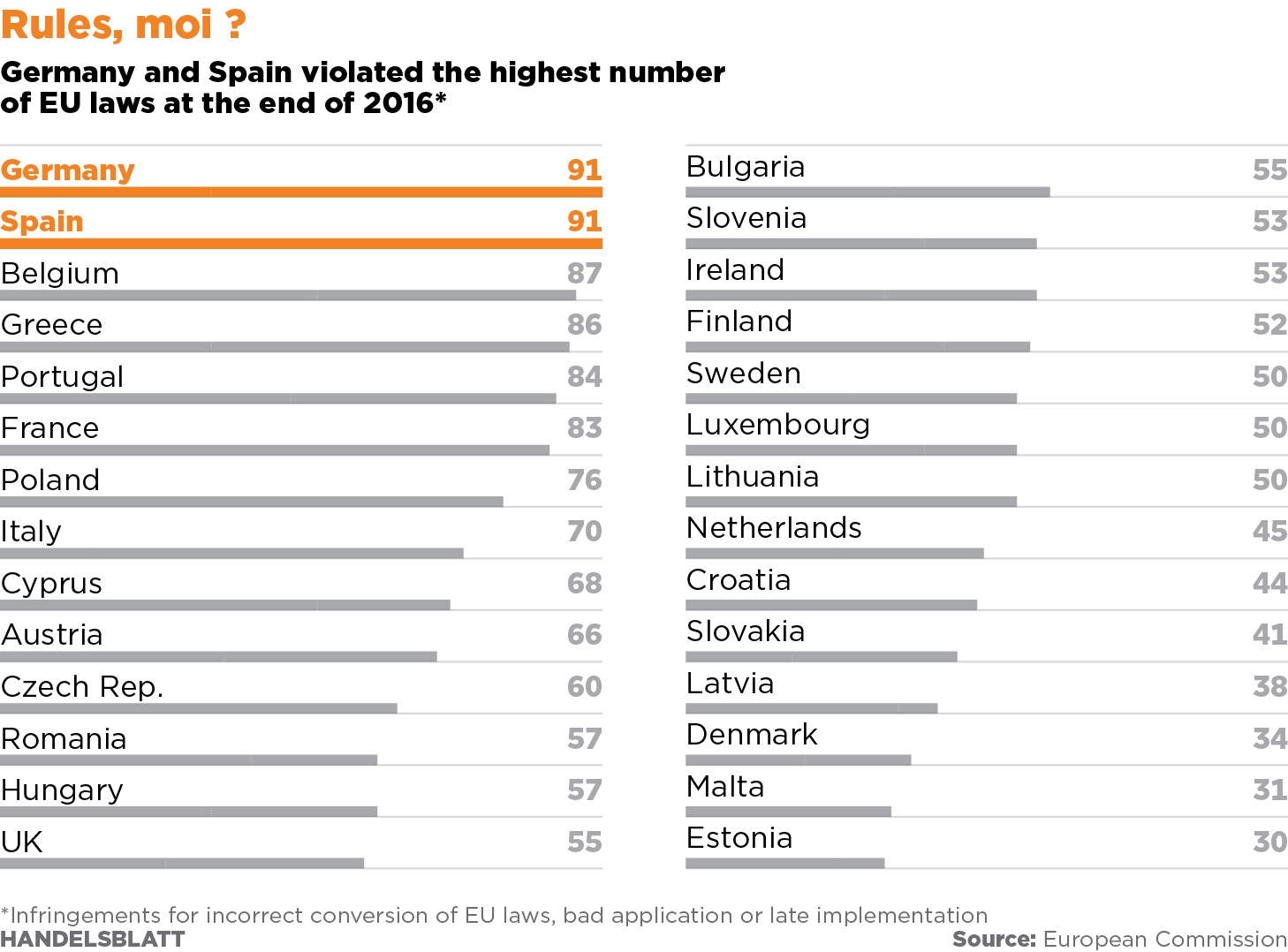
Sorry Mr B, here’s one more. If the EU rules, regs and norms must be adhered to. No matter what, how come Germany was the first country in 2003 to break the deficit rules that apply to all Euro Zone countries and they agreed with France , that the rules did not apply. And since 2007 it has broken the EU Current account rules concerning the size of its trade surplus vs economic output.

one last thing Mr B , have you seen this table……

So I will leave it at that. Sorry, ‘ leave’ only refers to the rant.

Numbers are not ‘fake news’ but they are used to ‘fake news’.

050718_EC_numbers_feat.jpg

All of us were taught at an early (some may not have listened ) that 2+2=4, 3+3=6….and that these were irrefutable facts . In other words, numbers do not lie. Or rather, as very young children that is how we interpreted these, apparently, simple sums . Whereas, most of us were told not to speak to strangers, even if they smiled, as a smile did not always = ‘Good’.

The number bit was a lot more easily absorbed . So as we grew up , it was in the security that if we were given ‘numbers’ it equated to a fact. What we should have been told is be very aware of numbers given by smiley people.

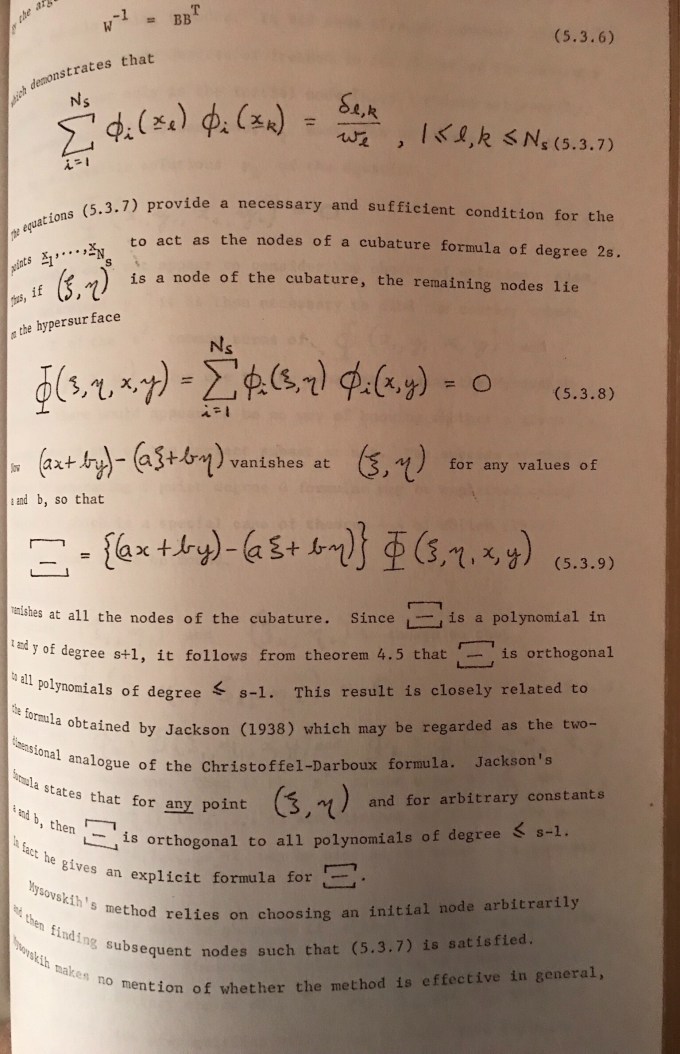
I, suddenly, became aware of this whilst talking with a friend about his chosen PhD subject ..the study of ‘numerical quadrature and cubature processes‘. Yeah, well, what is that you ask, which I did , ask that is. It is something to do with the measurements beneath a curve. He, then, proceeded, to show me his leather-bound copy of his 250+ page thesis, an image of which is below…

Courtesy of Corbett Morrow PhD. Bsc.

It occurred to me (well something had to) that perhaps numbers aren’t always the ‘absolute’ facts we believe them to be. If it takes two hundred and fifty pages to prove (and I don’t know if it did. No, I didn’t ask ‘cos I wouldn’t have understood the answer) what numerically happens under a curve , probably somebody has written another two hundred + , showing something different.

How does this have any impact on the way we go about our everyday life, working. or otherwise? Apart from, of course, maybe knowing what’s going on with the numbers in our curves beneath our umbrellas (they have a curve underneath them).

To clarify my confusion (an oxymoron, perhaps. If I clarify my confusion, then I am no longer confused?), I’ll start with percentages.

Fact: 100% of £1000= £100

Fiction: 50% off what ? I have spent much of my working life being asked

What is my discount?

My answer was frequently along the lines (in the last five years, it has been less of an issue….)

It can be anything you want it to be …..surely you would like to know what the real  cost is? I can double the real price and give you 50% off ,or leave it as it is and you get 0%

Answer…

But what is my discount?

Retailers constantly bombard consumers with 50% off!, up to 70% off …. leaving the consumer completely confused as to what the percentage really means, being uncertain as to what real price should be.

The number 1. Generally, considered quite a lowly figure particularly when used on its own eg 1p. To the vast majority 1p on its own (1 cent for those more acquainted with Euros) is pretty humble and of little value.

Up until about three years ago there was a discount store chain called 99p stores. As they started to grow that 1p became very critical . On reaching £100 million turnover! The CEO, obviously , stated the store name cost them £10 million a year.

1p increase in income tax raises approximately £5 billion in additional revenue . This is a perfect example of confusion and why I use the word ‘approximately ‘, as the figure varies by as much 25% depending on where the information comes from.

1 is small , 0.5 is even smaller. 0.5% being the current bank rate is still generally considered to be small. If it were, increased by say 0.25% , to equal 0.75%, still on the small size when looking at bank rates , yet  the new rate  equates to a 25% increase. Not so small.

Here is one final number 1 example. One second is what us  mere mortals consider the lowest unit of everyday time. £5k would be considered a tiny amount in terms of the National Debt. Stick them together ie £5k every one second is how much the National increases. Suddenly both become a huge number. Or so I believe from one website National debt clock. I really don’t if this true ‘cos I can’t work it out.

Graphics…oft used by business ,politicians  and the media alike to completely change the perception of the same set of data.

For example

These two graphs show exactly the same data. The difference is that the one on the left does not start from Zero. Numbers the same, but the perception is totally different.

You just gotta love this one

beer

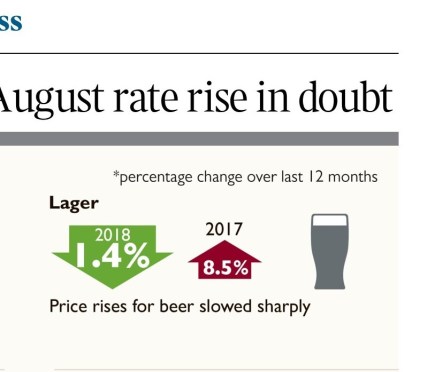
This was from the Times newspaper last week, illustrating influences on inflation. As it clearly describes the slowing in increases of the price of beer. All numbers are accurate and true . Yet they show the price of Beer in 2017 rising but the price of lager dropping in 2018. Lager did drop but Beer in 2018 has actually increased by 3.9%. Not earth shattering but intentionally misleading. And why is that green arrow so much bigger than the red one, when the actual percentage is 600% smaller .

What I am trying to say is that it all adds up (dropped that in nicely, albeit pure chance) to the way numbers are presented and the way we perceive them. Numbers , themselves, do not lie but the context in which they  are given will suit the ‘Giver’ be it politician, journalist, advertiser ,media or just the person standing next to you in a bar. Your job is to work out if they relate to your context. Unfortunately, many of us don’t have the time or wherewithal to do that and more often than not the ‘Givers’ know that.

Finally, when you next have to consider a number, whatever it be price, percentage, fraction, quantity, or any other format, consider the its context and the type of smile of its source.

There is a future for independant retailers …

wstowdogs

East London, the home of notorious gangsters, England football captains (Beckham & Kane) Boy bands (East17), The Olympic Stadium and Europe’s largest urban wetlands , now includes two step brothers who are  creating (at least I think) one of the most innovative Independant Retail models in the U.K.

The main Walthamstow store combines everyday convenience products with Eat17’s bakery, patisserie, restaurant and locally produced ready meals. The Bishop’s Stortford site includes a street food market where space is rented out to third parties. It includes a fishmonger and a florist with a barber and a tattooist to come for those who crave something different with their pint of milk. The Hackney site has a working Art Deco cinema and a trade kitchen.

They currently have four stores with another two planned for 2018. No two shops are alike. Yet they have not completely thrown the ‘ baby out’ with the bath water as they are members of the Spar buying Group.I have only been into one of their stores (Walthamstow) and suggest it is unlike any other Spar you will have been in.

We have also eaten in the restaurant , by no means easy, because of its popularity.

They have created a retail concept that is unique, in the purest meaning of the word. It would be very hard, if not impossible for a large chain to replicate. They are the first to admit it has not been easy getting there and they believe ten stores are their maximum.

Not satisfied with all that it is involved with such a complex project they have created an additional revenue stream. Some of the products for sale in the shop are their own creations which they are selling to other retailers (e.g ‘Eat17 Bacon Jam’ which is sold in Waitrose) providing an alternative income stream and reinforcing their brand.

All this has be done since 2006, when they opened their first store. Furthermore , they have done this during the worst financial crisis in modern history and the during the most turbulent retail environment within the last forty years, yet with very little retail experience of their own.

I believe they have developed a retail concept which is

  • innovative
  • creative
  • provides high service levels
  • understanding and meeting the needs of the  individual local market place
  • unique product
  • alternative revenue streams

None of this has been achieved by sacrificing margin. They don’t compete with discounters and make no pretence to do so.

Here are some of the awards they have won in recent years (from their own web site)

  • The Grocer Magazine’s Best Store in the UK 2012
  • Finalists for Best Store in the World 2013
  • The Good Food Guide 2015
  • Tripadvisor Certificate of Excellence 2014
  • Time Out Love London Award Winner 2015
  • Shortlisted for Best Newcomer in Food & Drink Observer Food Monthly Awards 2014
  • Nominated in both Producer and Retailer categories 2014 Urban Food Award
  • Voted favourite local restaurant by Gary Lee (Head Chef, The Ivy) London Foodie Guide, 2013

It is not a panacea of all retail ills. But it is a bloody good footprint for good independents in all sectors to look and examine how it could be translated to work in their own markets.

Eat17 are not alone. The Ginger Pig butcher shop chain ( eight I think) , the brainchild of a farmer and near bankrupt proper developer (Yorkshireman this time), again with no retail experience. Yet have developed, expanded and succeeded within the same turbulent times. There will be others, but what I find interesting and I believe significant is that neither of these two models were created by those who had any experience within the traditional retail market. I am not suggesting that the only future for independent retailers is for those who do not have any retail experience. But I do firmly believe that an independent retailer will only have a successful future if they look beyond the traditional model.

Ps…(for those who are interested)

Walthamstow Dogs image at the top , sadly (not quite sure why I say that . I have been about half a dozen times and won sod all, so I am not that sad) only the facade exists , behind which is a housing development. The owners – the Chandler Family (of Walthamstow Dogs) sold up some time ago. One of the family members is Victor Chandler who created one of the first online betting operations ‘BetVictor’ so another East end boy ‘done’ good.